Captain Michael R. Lachowicz
United States Coast Guard
For some, public service is a chapter in a career; for Dr. Oscar Orringer, it is the defining theme of a five-decade narrative written across the skies, the seas, and the structural foundations of American aviation. A distinguished aerospace and mechanical engineer, military veteran, and dedicated public servant, he has spent his life ensuring the safety of others—first by finding the breaking points of aircraft, and later by being the unbreakable anchor for the crews of U.S. Coast Guard Air Station Cape Cod.
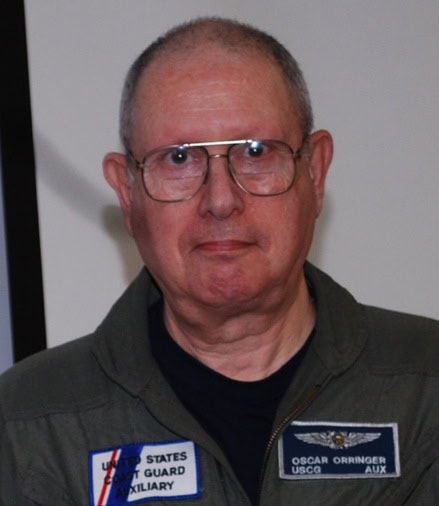
Long before he became an operational anchor for the Coast Guard, Dr. Orringer built his foundation in the rigorous academic halls of the Massachusetts Institute of Technology. Demonstrating an early, exceptional aptitude for aviation engineering, he earned his Bachelor of Science, Master of Science, and Aeronautical and Astronautical Engineer degrees simultaneously from MIT’s Aeronautical Engineering Department in 1963. Following his time in active duty and driven to master the complexities of flight safety and structural dynamics, he returned to the institute’s research staff and went on to complete his Doctor of Science in Aerospace Engineering in 1972. This deep-seated academic expertise set the stage for a career dedicated to protecting lives through engineering excellence.
Parallel to his early academic success, his journey of active military service began in 1963, commissioning through the United States Army R.O.T.C. program. Dr. Orringer entered active duty as a combat engineer, serving with the 577th Engineer Battalion at Fort Benning, Georgia, from 1963 to 1965. His service then took him overseas, where he served in the Engineer Section of the Headquarters I Corps in Uijongbu, Korea, from 1965 to 1966. Having earned the Basic U.S. Army Parachutist Badge, the young Army officer developed the disciplined leadership, grit, and operational mindset that would define the rest of his life.
Upon completing his active-duty tour, Dr. Orringer joined the MIT research staff concurrent with being an MIT Lecturer in 1972, where he served as a special advisor in structural integrity to the USAF Aeronautical Systems Division at Wright-Patterson AFB, Ohio. There, he participated in damage tolerance evaluations for the C-5A, F-4E/F, and C/KC-135 fleets. He left MIT in 1978 to join the team at the U.S. Department of Transportation’s Volpe National Transportation Systems Center in Cambridge, Massachusetts. Here, he became a quiet guardian of the traveling public. As a leading national expert in structural integrity and damage tolerance, Dr. Orringer was called upon when the aviation world was shaken by tragedies. He evaluated the catastrophic fatigue and failures of the American Airlines DC-10 fleet following the 1979 Chicago O’Hare crash, investigated the Beechcraft V-tail Bonanza fleet from 1984 to 1986, and conducted critical fatigue testing on fuselage structures of the Boeing 737-100/200 following the in-flight structural failure of Aloha Airlines Flight 243 in 1988.
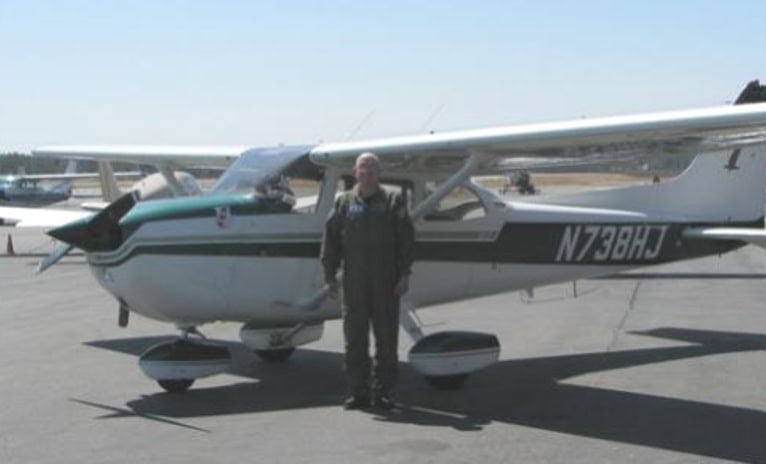
When he retired from his engineering career in 1995, Dr. Orringer didn’t step away from service; he simply changed uniforms. Joining the U.S. Coast Guard Auxiliary in 1997 and the Civil Air Patrol in 2007, he brought his unparalleled aviation expertise to the operational front lines. He has spent a quarter of a century as an auxiliary aviator, instructor pilot, and recreational boating safety instructor, logging over 1,600 flight hours as pilot-in-command during offshore patrols and search-and-rescue missions. He has also led at the highest volunteer levels, serving as Flotilla Commander, South Shore Division Commander, National Weather Branch Chief, and the Staff Officer for Aviation for the Northeast District’s Northern Region.
But perhaps his most enduring legacy lies inside the walls of U.S. Coast Guard Air Station Cape Cod. Qualifying as an assistant Operations Duty Officer in 1998 and advancing to a fully qualified ODO by 2008, Oscar has logged an astonishing 8,000 hours at the watch desk. He has prosecuted over 200 SAR cases and has personally trained over 225 new ODOs, passing his wisdom down to the next generations.
In 2019, Air Station Cape Cod sought to permanently honor the man who has served as its steadfast anchor for decades. In a deeply meaningful tribute, the command officially dedicated its watch floor as the “Oscar Orringer Operations Center.” His name is now permanently woven into the fabric of the unit’s daily operations, ensuring that every launch, rescue, and mission coordinated from Cape Cod begins in a space dedicated to a legendary volunteer who continues to help anchor the watch for generations of Coast Guard crews.
In the highly transient world of military service, where Coast Guardsmen transfer in and out on a relentless, revolving cycle, Oscar has been the ultimate continuity. For nearly three decades, he has been the heartbeat of the air station. Over the years, countless men and women have served their tours, transferred away to distant units, and eventually received orders back to Massachusetts. For those returning crews, the truest sign that they have finally rotated back to Cape Cod isn’t the familiar sight of the coastline or the hangars. It is hearing Oscar’s steady, familiar voice over the radio telling them to switch to ground and testing the alarms at exactly 1100 every Tuesday and Thursday.
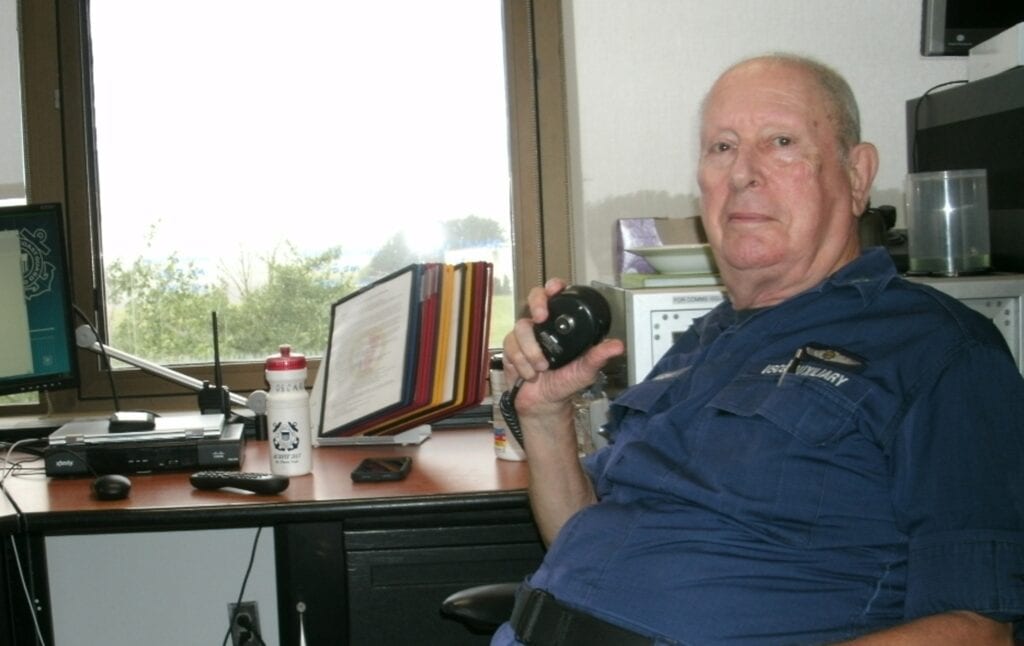
When he is finally off the watch floor, Dr. Orringer’s passion for service and quiet focus does not rest. He continues to dedicate his personal time to his local Coast Guard Auxiliary Flotilla and the Civil Air Patrol, mentoring young cadets and supporting regional safety programs. At home, he channels his meticulous engineering eye into tending his vibrant vegetable garden, coaxing life from the soil with the same patience he uses to train watchstanders. When the tools are put away, Oscar is most often found with a book in hand, deeply immersed in his favorite pastime: devouring classic murder mystery novels, where his analytical mind happily untangles complex puzzles page by page.
In a lifetime dedicated to public service, Dr. Oscar Orringer’s commitment to the Coast Guard mission has never wavered. To hear his steady voice on the radios is to know the watch is secure. Hearing his voice is a constant reminder of the unwavering dedication that defines Air Station Cape Cod and Coast Guardsmen everywhere. His contributions have been recognized with numerous prestigious awards and decorations, including the U.S. Department of Transportation Silver Medal, two U.S Department of Transportation Bronze Medals, the Coast Guard Auxiliary Medal of Operational Merit, and the Coast Guard Auxiliary Commendation Medal. He was also awarded the Coast Guard Presidential Unit Citation for his critical volunteer role during Hurricane Katrina relief efforts and received the American Red Cross Heroes Award as an Outstanding Military Support Volunteer, cementing a legendary legacy of safety, vigilance, and quiet service.
Note: This article was previously published as part of the United States Coast Guard’s The Long Blue Line Series.