SK1 Edward V. France
United States Coast Guard
Arnold Palmer grew up in Latrobe, Pennsylvania, living next to a country club where his father worked as a greenskeeper and teaching professional. His father began teaching Palmer the game at the young age of three and, at age five, he regularly played 18-hole rounds. He quickly proved his prodigious talent on the course by capturing the Western Pennsylvania Junior and Amateur championships five separate times. His success as an amateur led to him receiving a scholarship at Wake Forest.
Palmer had a distinguished college golf career at Wake Forest University. However, after his roommate was tragically killed in an automobile accident, he felt he “needed to get away.” He decided that enlisting in the Coast Guard was his best option. He later made his choice, saying, “I thought it was an outfit that I wanted, it was special… all the things that the Coast Guard did, I thought, were very exciting.”
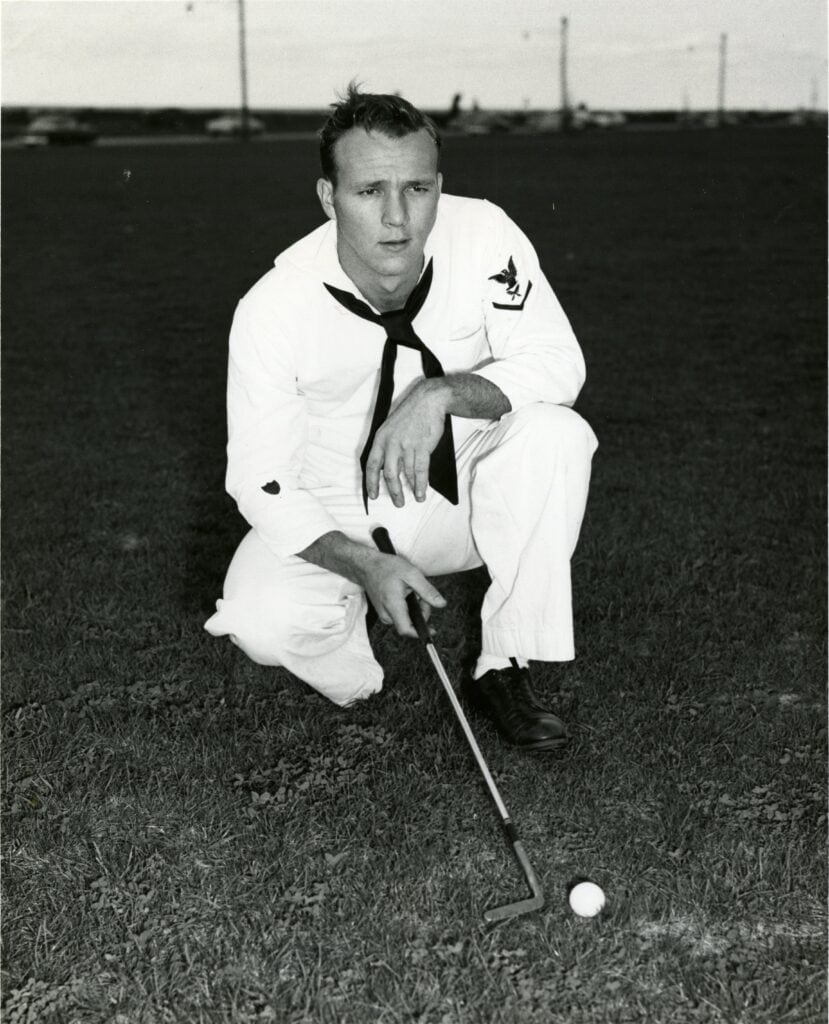
Palmer’s first assignment was a nine-month billet in Cape May, New Jersey, where he served in the training department. He was responsible for teaching recruit’s essential skills in personal protection, including judo and other defensive maneuvers. While his time for golf was limited, he managed to design his first course–a small pitch-and-putt situated between two runway strips. However, this assignment was not without its challenges. An incident with a recruit resulted in an “accident” that brought Palmer close to a captain’s mast. Fortunately, his commanding officer understood the situation and, rather than punishing Palmer, offered him a choice for his next duty station.
Palmer had the option to transfer to either Washington D.C., or Cleveland. Palmer decided to choose Cleveland Ohio where he spent the remaining years of his enlistment. He served as a Yeoman for the commander of the Ninth Coast Guard District Auxiliary. He was later moved to district headquarters, where he recalled, “I became a photographer and I did the identification for all the Coast Guardsmen in the Ninth Coast Guard District.”
During his time in Cleveland, Palmer made a deal with his boss, Rear Admiral Roy Raney, to teach him how to play golf. This arrangement afforded him plenty of time to hone his own skills, and he later joked, “even some days they couldn’t find me. I was on the golf course.” His dedication paid off when he won the Northeast Ohio Amateur Championship. Rear Admiral Raney recommended him for the Coast Guard Academy. Palmer, however, declined the offer. He was flattered by the recommendation but explained his focus was elsewhere: “that meant an additional enlistment for me, and I was primarily ready to get out and give my shot at the PGA Tour.”
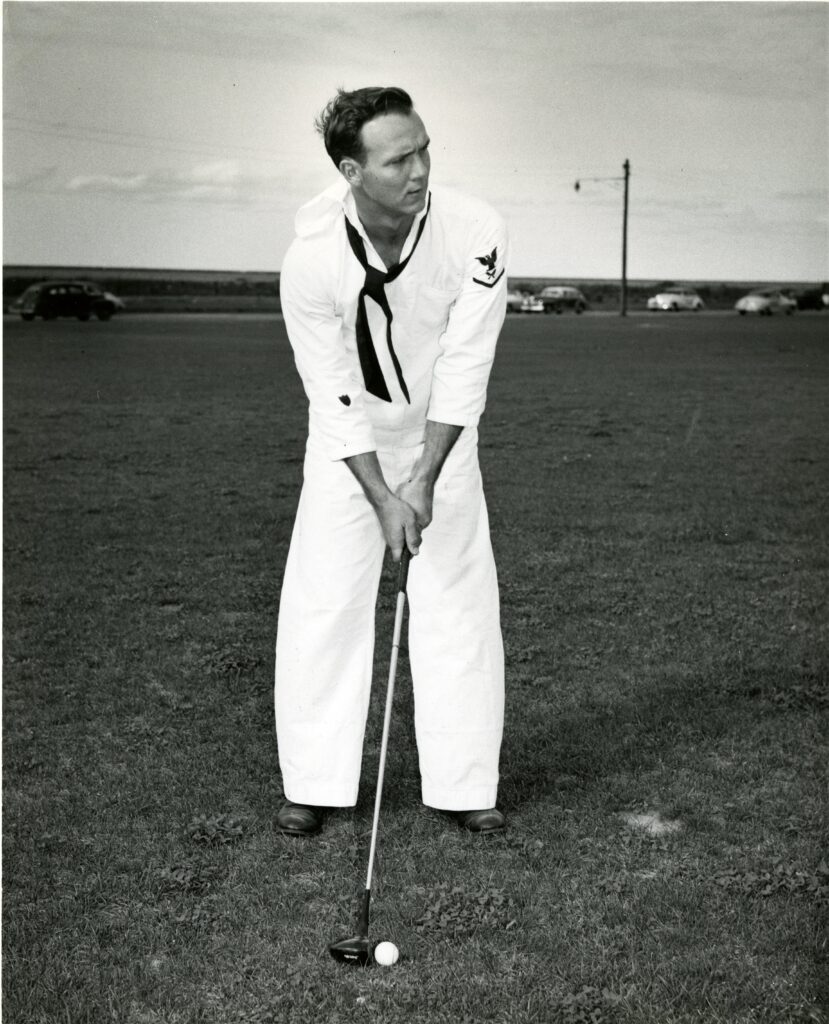
Palmer chose to leave the Coast Guard in 1954 to pursue his professional golf career, but he never forgot the profound impact the service had on his life. In an interview, he reflected on the growth he experienced: “The knowledge that I gained, the maturity that I gained in the Coast Guard was unbelievable. It matured me, it made me a better person for the world.”
He further elaborated on the value of military experience, stating, “The military isn’t just restrictions… it’s learning and it’s very important that young people have that opportunity to learn and to know themselves a little better. And I think the military helps put that in the right perspective.” The discipline and perspective he gained were instrumental in shaping the man he would become.
Upon leaving the service, Palmer returned to Wake Forest and won the 1954 U.S. Amateur tournament, which launched his professional career. He secured his first major victory at the 1958 Masters Tournament. Over his career, he amassed 62 PGA tournament wins, seven of which were major championships; and became the first professional golfer to earn over $1 million in career prize money.
Palmer was renowned for his aggressive playing style and the massive, devoted crowds that followed him, famously nicknamed “Arnie’s Army.” He was part of the inaugural class inducted into the World Golf Hall of Fame in 1974 and received the PGA Tour Lifetime Achievement Award in 1998.
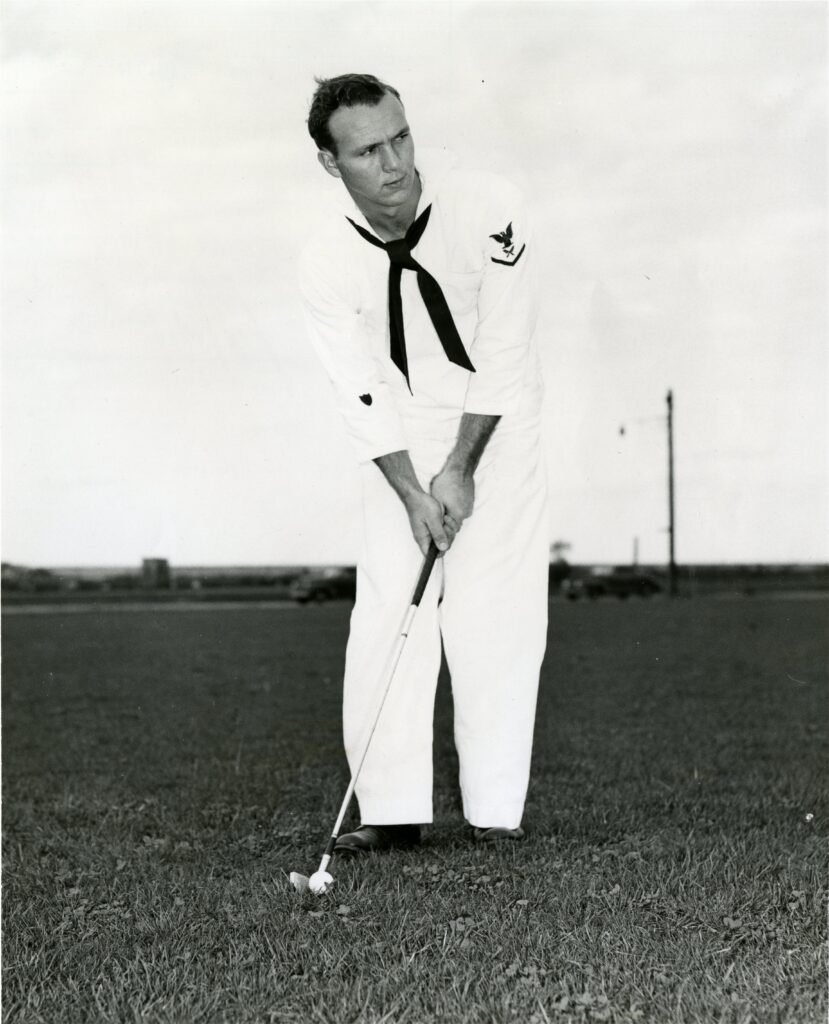
Palmer’s impact extended well beyond the golf course. He and his wife, Winnie, dedicated themselves to philanthropy, focusing on children’s health, youth character development, and nature conservation. Their work led to the creation of the Arnold Palmer Hospital for Children & Women in Orlando and the establishment of a nature preserve in his hometown of Latrobe, Pennsylvania. He also worked extensively with The First Tee, an organization dedicated to providing youth with opportunities in golf. His philanthropic efforts are continued today through the Arnold & Winnie Palmer Foundation.
In recognition of his contributions, Palmer was awarded the Presidential Medal of Freedom in 2004. The Coast Guard also recognized his legacy by naming in his honor a wing at Training Center Petaluma, where future Coast Guard Yeomen are trained.
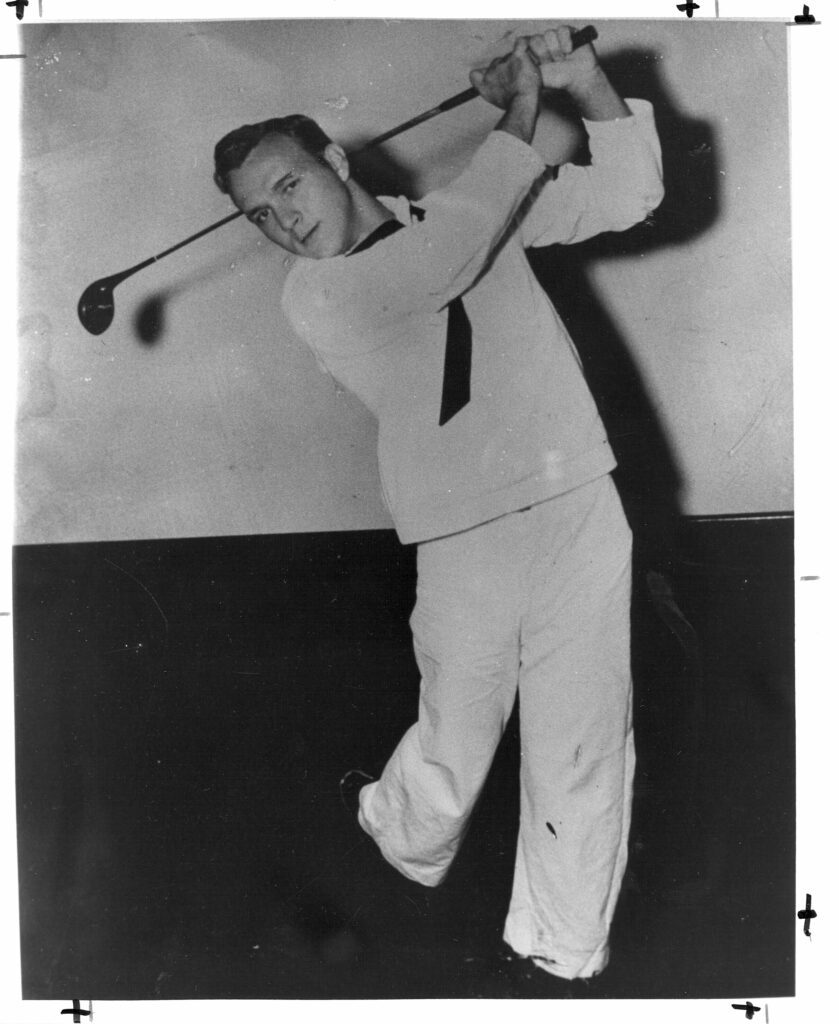
While Arnold Palmer will forever be remembered as “The King,” his true legacy is built on a foundation far removed from the fairway. To view his legacy solely through the lens of sport is to miss the essence of the man himself. The true foundation of his character was not built on the manicured greens of Augusta but forged during his three years of service in the United States Coast Guard. As a young man seeking direction after a personal tragedy, he gained what he called an “unbelievable” sense of maturity and self-awareness. This formative experience was the bedrock upon which he built his entire life. The perspective he gained cultivated a deep commitment to service, which later blossomed into a philanthropic empire dedicated to children’s health and nature conservation. The Coast Guard did not just give him a uniform; it gave him the tools to build a legacy of integrity, generosity, and purpose that has far outlasted his final round.
Note: This article was previously published as part of the United States Coast Guard’s The Long Blue Line Series.