Captain W. Russell Webster
United States Coast Guard (Retired)
Donald Horsley’s career fully exemplified the moniker, “Underway is the only way.” He served on 34 cutters and ships for a total of 29 years sea time. He served during three wars and was decorated for service in World War II and Vietnam.
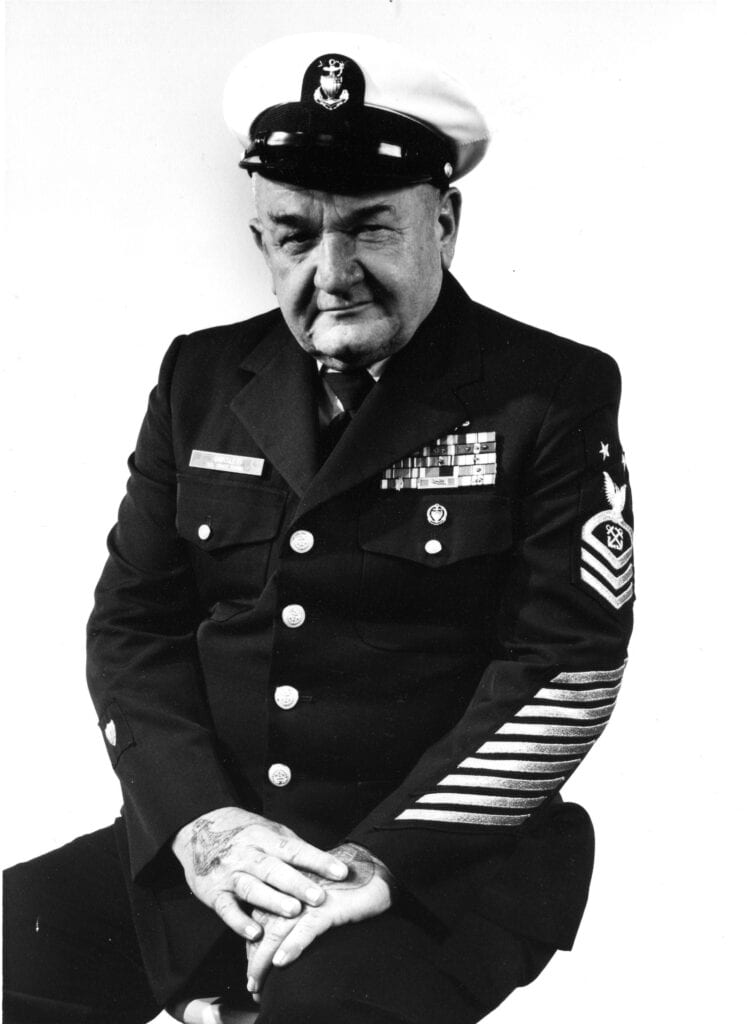
In his last years of sea service on CGC Morgenthau, a 378-foot-long high endurance cutter, some remembered that he had to petition Headquarters to have his “crow” moved further up his sleeve to accommodate his 11 hash marks representing 44 years of service. Others would fondly recall how he could be found making rounds about the cutter’s deck at 5:00 a.m. on the Bering Sea Patrol. And, as a sign of ultimate respect, the cooks would make him S.O.S. (meat gravy served over toast and biscuits) every morning, regardless of what was on the menu, and indulge his predilection for a tub of ice cream covered in chocolate syrup.
But somehow, the quiet master chief with a gravelly voice made the biggest impression with those who knew his schedule with the ship’s barber. It was a time when he would tell stories. And his fellow crew would line up along the bulkhead and up and down the ladders—in complete silence, so they could listen to the legend.
Now, to the stuff of lore. In the Second World War, he participated in Operation Dragoon, the invasion of Southern France and Operation Iceberg, the Battle of Okinawa. He did so as a coxswain on a landing craft from the USSCepheus (AKA 18) an Andromeda-class attack transport commanded and crewed by Coast Guardsmen. Horsley later served on four different 82-foot “Point” class cutters during the Vietnam conflict.
The Coast Guard’s participation in Vietnam required advocacy at the highest levels after a paucity of involvement in the Korean War. In early discussions about the Coast Guard becoming involved in the Vietnam conflict in April 1965, Coast Guard Commandant William Roland, “felt we had capability that should be used. During the Korean war, the Coast Guard had only a minor role…there were strong feelings in the Coast Guard that its military readiness capability should be used [in Vietnam].” * The Coast Guard assured the Navy representatives that the cutters would operate two-thirds of the time and could be ready within 30 days and transported on ships. The memorandum between the two services was formally finalized on July 8, 1965.
But the Coast Guard did not wait for the paperwork. On April 29, 1965, Defense Secretary Robert McNamara and Treasury Secretary Henry Fowler sent a joint service memorandum to President Johnson, approving the Coast Guard’s service in Vietnam under the operational control of the U.S. Navy. On May 21, 1965, the first four, 70-ton, lightly steeled 82-foot-long Point-class cutters were loaded on aboard the 564-foot United States Lines freighter SS Pioneer Mist at Naval Supply Center Bayonne, New Jersey. The cutters were conveyed as deck cargo on the larger ship accompanied by two crewmen for each patrol boat. Their destination was Subic Bay in the Philippines.
The 82-foot Point-class cutters would play an important role during the Vietnam Conflict. They were a perfect fit for near-shore shallow-water operations where they “inspected vessels for contraband, intercepted and destroyed North Vietnamese and Viet Cong craft and provided fire support for friendly forces.” But there was “resentment on the part of Navy officers. They didn’t want the Coast Guard in Vietnam. They’re just boats. You can only run a boat 10 or 20 percent of the time.”
History would show that the Point-class cutters that operated off Vietnam would, according to Coast Guard captain James Hodgman, U.S. Coast Guard, operate
. . . 70 percent of the time and could remain on this schedule indefinitely. Even while the cutters undergo their 6,000-hour overhauls and annual drydocking…the schedule is maintained. To my knowledge, such continued operational utilization off a hostile coast, remote from shore support, halfway around the world from the United States, has not been matched.
Operation Market Time
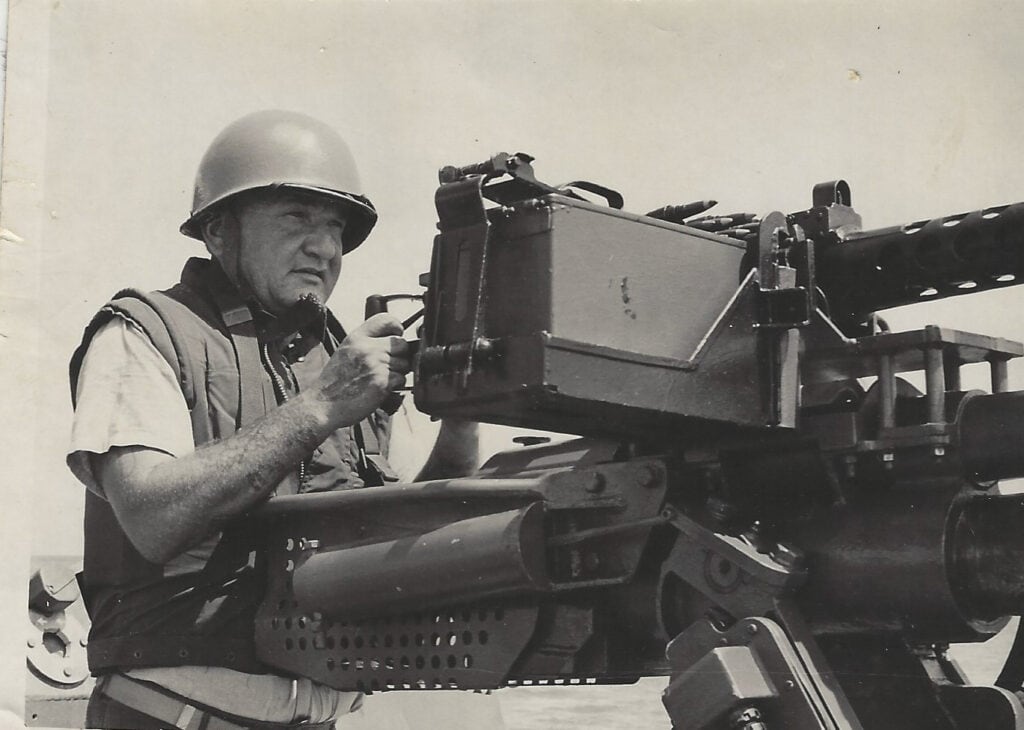
During the Vietnam War, BMCM Horsley served 41 months as the senior enlisted person assigned to Coast Guard Squadron One, Division 13, out of Cat Lo, Republic of Vietnam. This division of 82-foot patrol boats was tasked with interdicting the maritime reinforcement and re-supply of communist forces fighting in South Vietnam. Horsley would receive the Bronze Star Medal with “V” for valor for his time in Vietnam during Operation Market Time.
According to regulations, the Bronze Star medal
. . . could be awarded to any military who, serving within or together with the army of the United States after 6thDecember 1941, decorating himself by heroic or meritorious deeds as military, not participating in air operations, during military operations against an armed enemy or during an armed conflict in which the United States was not participating as a belligerent. The decoration could be awarded for the described heroic actions, not sufficient to be awarded the Silver Star or for meritorious actions or meritorious acting of service, which did not qualify for the awarding of the Legion of Merit. A bronze “V” for “Valor” was awarded when the Bronze Star was received for heroism in battle, thus distinguishing the award from the Bronze Stars awarded for merit.
The medal’s back bears the inscription “HEROIC OR MERITIOUS ACHIEVEMENT” along with the recipient’s name. Horsley’s medal was awarded for a prolonged, dangerous period over several months in direct action with the enemy.
The Master Chief’s meritorious service in Vietnam lasted from October 25, 1966, to January 13, 1969. Signed by Vice Admiral Elmo Zumwalt, Commander Naval Forces, Vietnam, his citation told a story of a man who “participated in over one hundred combat patrols… and came under intensive enemy fire on eleven separate occasions.” But, like so many other clipped military award citations, it did not indicate the depth and commitment to service in so few words.
A Checkered Story of Hell Raising
Horsley’s service record reveals a colorful career with occasional need to spend unauthorized time off station, perhaps blowing off steam. He signed up with the Coast Guard on Coast Guard Day, August 4, 1942, at the Chicago recruiting office. His first brush with discipline was three years into his enlistment overseas on board the Cepheus for “leaving station without properly being relieved.” In fact, his commanding officer had recommended a bad conduct discharge and only relented on the condition that Horsley successfully completed a six-month probationary period without infraction. He would go on several occasions “before the mast,” usually for short stints of AWOL that were mitigated by his superior performance and lengthy service.
A Fitting End
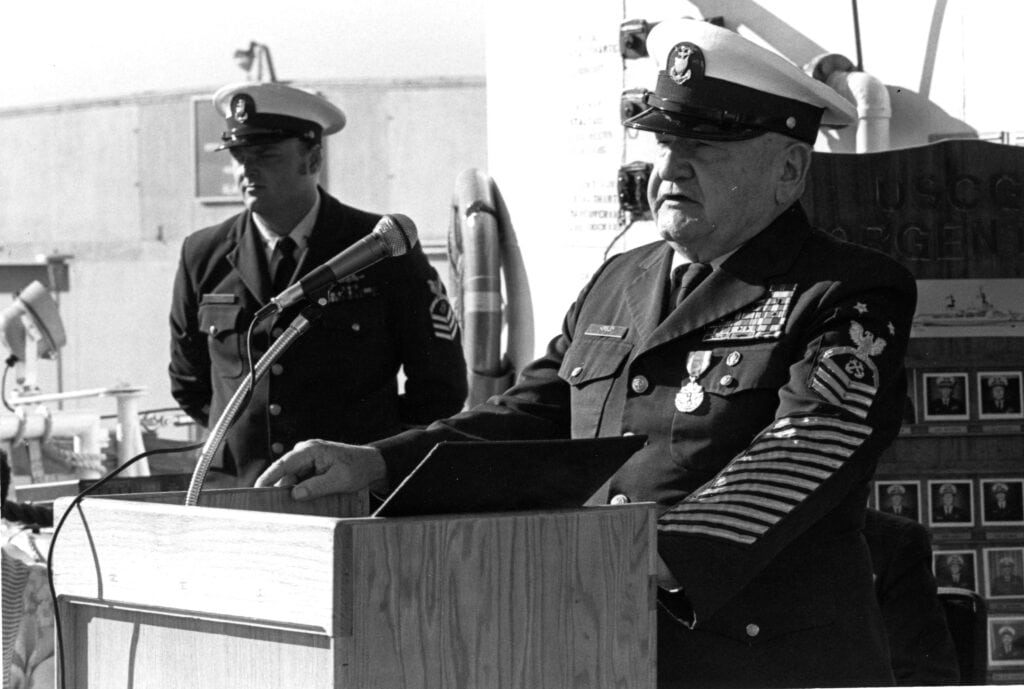
Horsley told one shipmate that he wanted to die at sea. At his January 1987 retirement ceremony, BMCM Horsley recalled that he had “raised more hell in a 20-year period than most people do in a lifetime,” which proudly inspired the cutter’s motto “Raise Hell.” He received the Meritorious Service Medal for his commitment to service during stellar career. After his retirement, a TV reporter asked him if he was going to miss the water and he responded, “Argh, I’ll take a shower every day and be just fine.”
Master Chief Horsley died less than a year after retiring, on August 24, 1987, at the age of 62 in Concord, California. He was cremated and his ashes were subsequently scattered at sea. On a grey, foggy Alaskan day on the Bering Sea, the cutter Morgenthau’s fellow Boatswain Mates piped, “Now Bury the Dead” and Horsley’s ashes, carried in a brass 5” 38 caliber shell casing, were poured off the fantail by two shipmates.
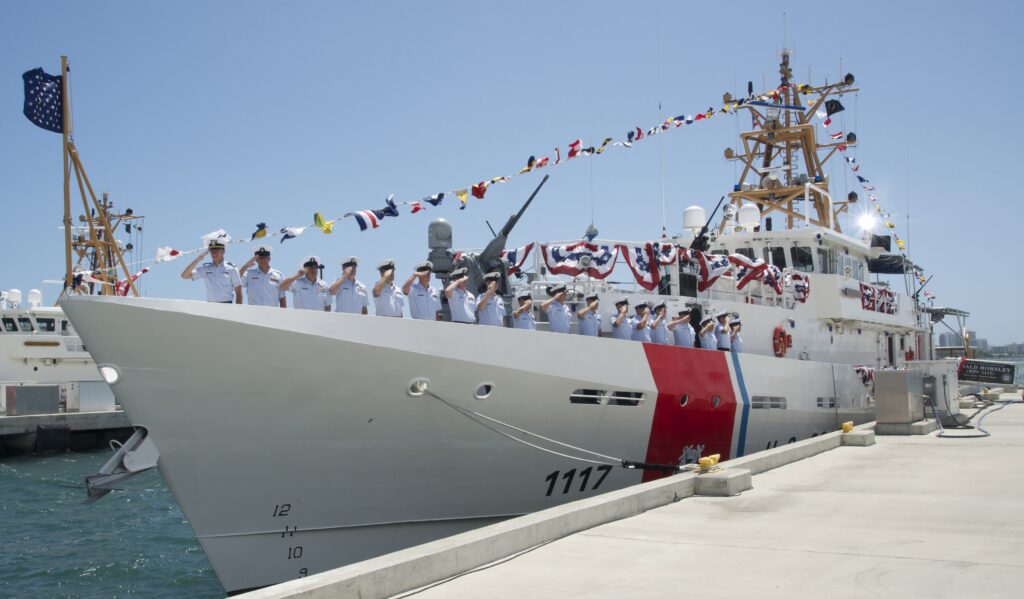
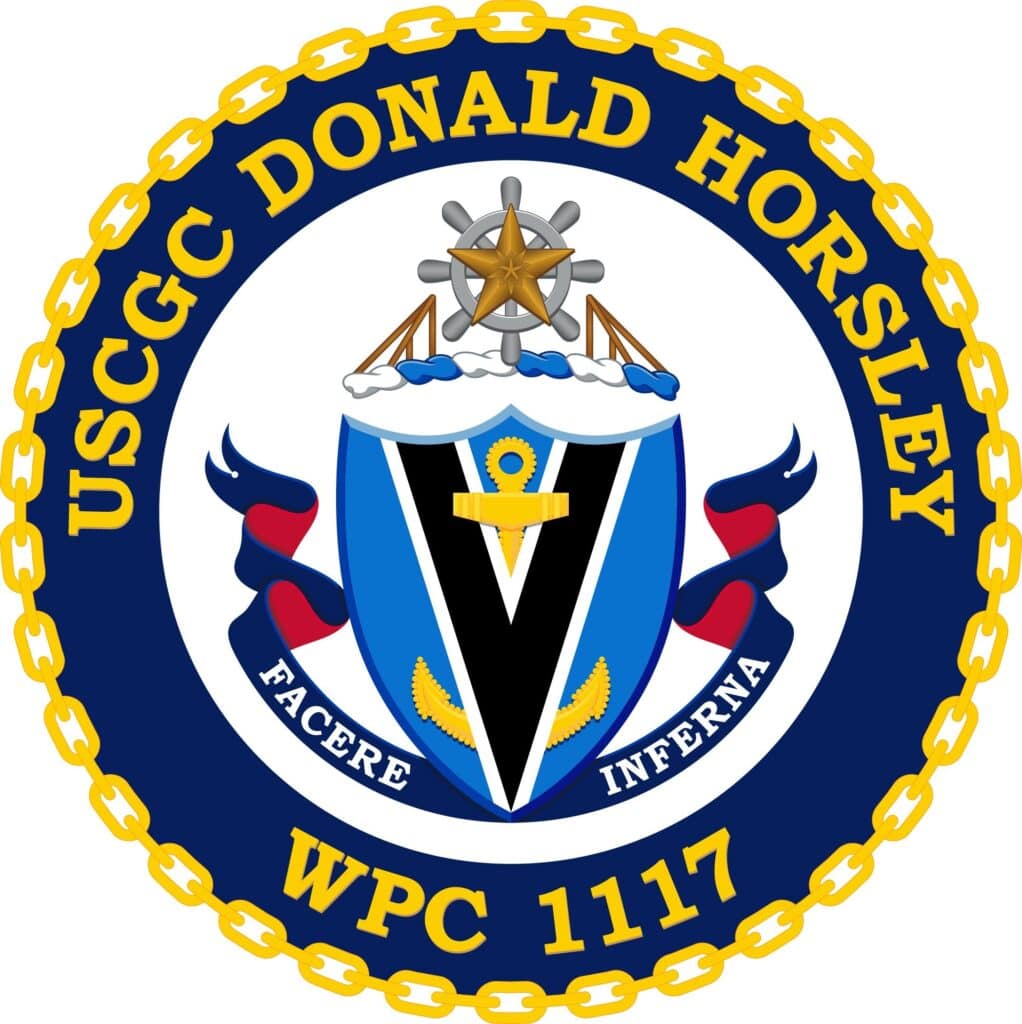
The USCGC Donald Horsley (WPC-1117) is the 17th of the Coast Guard’s class of Fast Response Cutters commissioned on May 20, 2016. Homeported in San Juan, Puerto Rico, Horsley executes key missions on behalf of Sector San Juan and the Coast Guard’s District Southeast, including counter-drug, alien migrant interdiction, and search and rescue operations.
[*Quoted text found in Coast Guard captain Alex Larzelere’s book, The Coast Guard at War: Vietnam, 1965-1975(naval Institute Press: Annapolis).]
Note: This article was previously published as part of the United States Coast Guard’s The Long Blue Line Series.