BMCM Thomas H. Hines
United States Coast Guard
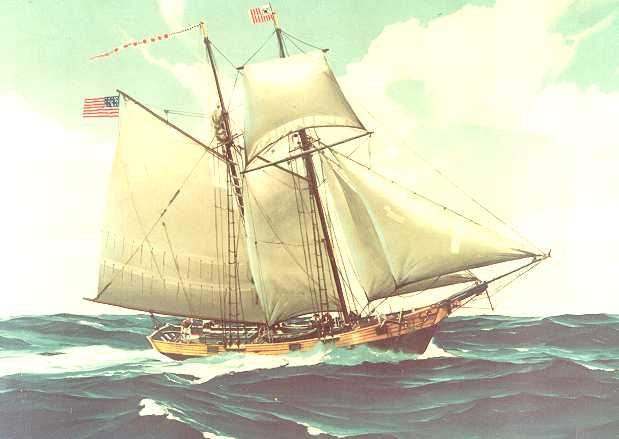
The history of the United States Coast Guard is filled with larger-than-life figures, but few occupy a place as unique as Hopley Yeaton. For nearly half a century, he was celebrated as the first commissioned officer of the Revenue Cutter Service and, by extension, the first commissioned officer of what would eventually become the Coast Guard. Whether that distinction can be conclusively proven remains a matter of historical debate. Yet the question itself risks obscuring the more important truth. Hopley Yeaton’s significance does not depend upon whether he was first. His importance lies in the fact that he belonged to the small group of men who transformed Alexander Hamilton’s vision of a revenue marine into a functioning reality. In an era when the survival of the young republic depended as much upon customs revenue as military strength, Yeaton helped establish the standards, traditions, and professional ethos that would define the service for generations.
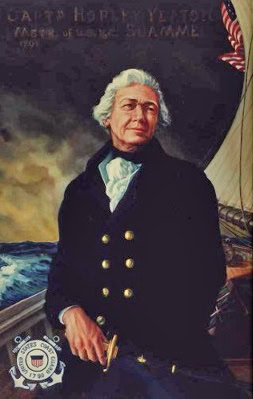
Born in New Hampshire in 1740, Yeaton came of age in a world shaped by the sea. New England’s economy was inseparable from maritime commerce, and generations of sailors made their living in the fisheries, coastal trade, and transatlantic shipping. Like many men of his generation, Yeaton’s life would be shaped by both commerce and conflict. By the time the American colonies entered their struggle for independence, he was already an experienced mariner capable of commanding vessels and navigating the often-dangerous waters of the North Atlantic.
During the Revolutionary War, Yeaton served the cause of American independence at sea. Though his wartime career lacks the dramatic fame associated with naval heroes such as John Paul Jones, it reflected the experience of countless mariners whose service was essential to sustaining the Revolution. The conflict demanded not only soldiers and statesmen but also practical seamen who could transport supplies, carry intelligence, and keep commerce moving despite British efforts to dominate the sea.
When peace finally arrived in 1783, Yeaton faced the same challenge confronting thousands of veterans: finding a place in the new nation they had helped create. The Confederation government possessed little authority and even less money. Opportunities for public service were scarce. Like many former officers and sailors, Yeaton returned to civilian pursuits and attempted to build a livelihood in a nation struggling to establish itself.
The adoption of the Constitution in 1788 transformed those prospects. Under the leadership of President George Washington and Treasury Secretary Alexander Hamilton, the federal government began constructing institutions capable of sustaining the republic. Among Hamilton’s greatest challenges was financing the government. The United States had inherited substantial debts from the Revolution yet possessed few reliable sources of income. Hamilton understood that customs duties on imported goods represented the nation’s most dependable source of revenue.
Collecting those duties, however, proved easier on paper than in practice. Smuggling was widespread. Along the extensive American coastline, merchants could easily avoid customs officials and deprive the Treasury of desperately needed revenue. To address this problem, Congress authorized the construction of ten revenue cutters in 1790. These vessels would patrol the coast, enforce customs laws, prevent smuggling, and ensure that duties were properly collected.
The creation of the Revenue Cutter Service marked one of the earliest exercises of federal authority under the new Constitution. The officers selected to command these vessels faced a daunting task. They would operate far from Washington, often with little supervision, limited resources, and uncertain legal precedents. Success would depend not upon grand strategy but upon judgment, integrity, and perseverance.
It was into this environment that Hopley Yeaton entered federal service.
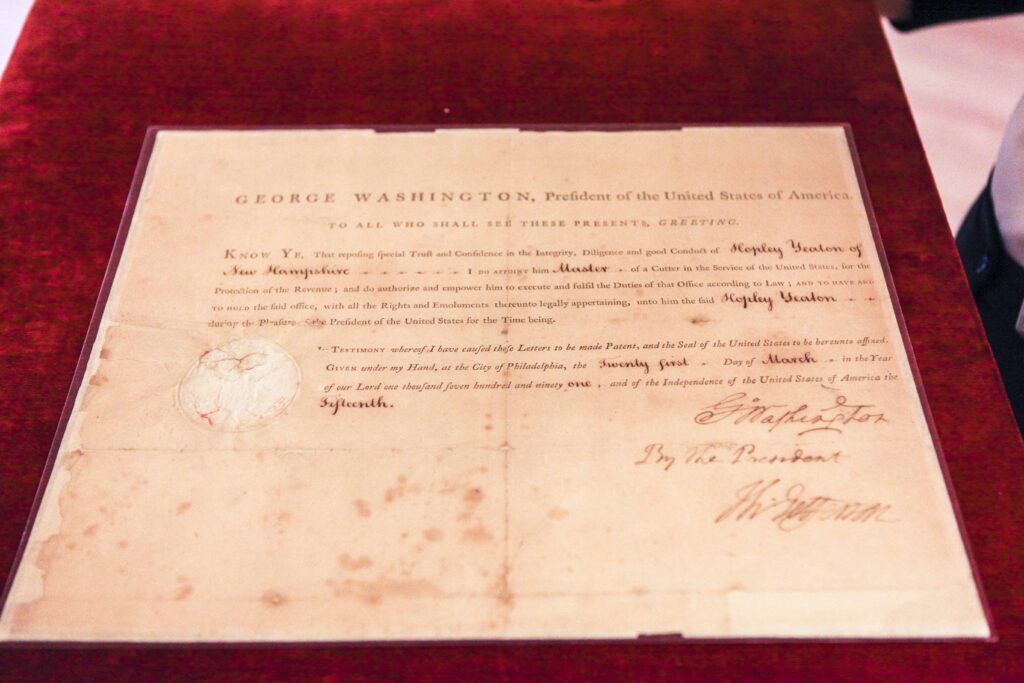
In 1791, he received an appointment to command the revenue cutter Scammel at Portsmouth, New Hampshire. Named for Revolutionary War officer Alexander Scammell, the cutter was assigned to one of the nation’s busiest maritime regions. The waters of New England were crowded with fishing vessels, merchant ships, and coastal traders. The opportunities for smuggling were plentiful, and enforcement required constant vigilance.
The challenges facing Yeaton extended beyond the simple interception of smugglers. The early Revenue Cutter Service, also known as the Revenue Marine, was an experiment. Procedures had to be developed. Crews had to be recruited and trained. Relationships with customs collectors, merchants, and local communities had to be established. Every decision made by officers like Yeaton helped define the character of the new service.
Unlike naval officers whose exploits were often recorded in dramatic battle narratives, revenue cutter officers spent much of their careers engaged in routine but essential work. Their success was measured not by captured enemy ships but by laws enforced, revenue protected, and public confidence maintained. The duties demanded professionalism and restraint. Revenue cutter officers represented federal authority in communities that often viewed government intervention with suspicion.
Yeaton’s surviving correspondence reveals a practical officer deeply concerned with efficiency and effectiveness. One of his most interesting recommendations involved the employment of boys aboard revenue cutters. He argued that young apprentices could assist with shipboard duties while also receiving valuable maritime training. The proposal reflected both economic pragmatism and an understanding of the importance of cultivating future seamen. It also demonstrated his interest in developing capable crews and improving service effectiveness.
Yeaton served aboard Scammel throughout the formative years of the Revenue Cutter Service. During that period, the service evolved from Hamilton’s administrative experiment into a respected instrument of federal law enforcement. The cutters protected revenue, supported customs collectors, and established a federal presence along the nation’s coastline. Their work helped stabilize government finances and contributed directly to the survival of the young republic.
The importance of that mission cannot be overstated. Customs duties generated the overwhelming majority of federal revenue during the nation’s early years. Without effective enforcement, Hamilton’s financial system might have collapsed. The Revenue Cutter Service served as the enforcement arm that converted tariff legislation into revenue. Officers like Yeaton stood at the intersection of policy and practice, ensuring that laws enacted in Philadelphia became reality in America’s ports and harbors.
By 1809, after nearly two decades associated with federal maritime service, Yeaton’s career came to an end. His resignation reflected the realities of advancing age and changing circumstances. Unlike modern Coast Guard officers, early revenue cutter officers enjoyed no retirement system. Public service offered honor and responsibility, but little long-term security. Upon leaving government service, Yeaton returned to civilian life.
His final years passed largely in obscurity. He died in 1812, the same year the United States entered another war with Great Britain. At the time of his death, there was little indication that future generations would remember him as anything more than one of many officers who had served the federal government during its formative years.
Yet history often takes unexpected turns.
Nearly a century after his death, Revenue Cutter Service historians began searching for origins and founders. As the service matured, interest grew in identifying the first officers and establishing a narrative connecting contemporary personnel with the organization’s earliest days. During this process, Yeaton’s name emerged as a leading candidate to be recognized as the first commissioned officer of the Revenue Cutter Service.
Over time, that claim hardened into accepted tradition. Publications repeated it. Speeches reinforced it. Historical summaries elevated Yeaton into a symbolic founding figure. Eventually, the Coast Guard Academy embraced his memory, and his reputation became deeply woven into institutional culture.
Modern scholarship has complicated that narrative. Researchers examining appointment records, correspondence, and commissioning procedures have raised significant questions about whether Yeaton truly received the first commission. Evidence suggests that several other officers may possess equally strong, or perhaps stronger claims to that distinction. The surviving records are incomplete, and definitive conclusions remain elusive.
Yet this controversy ultimately tells us more about institutional memory than about Yeaton himself.
The search for a single “first” often oversimplifies the reality of history. The Revenue Cutter Service was not created by one man. It emerged through the efforts of many individuals: Washington, Hamilton, customs collectors, shipbuilders, sailors, and officers scattered across the American coast. Yeaton was part of that collective endeavor. His importance rests not in symbolic priority but in substantive contribution.
Indeed, the debate surrounding his status highlights a deeper truth. The early Revenue Cutter Service depended upon capable officers willing to accept uncertain appointments in an untested organization. Men like Yeaton were pioneers not because they were necessarily first, but because they helped build something lasting. They transformed legislative intent into operational reality. They established traditions of professionalism and public service that would endure long after their names faded from public memory.
Viewed through that lens, Hopley Yeaton’s legacy becomes clearer. He was a Revolutionary-era mariner who carried the spirit of public service into the early republic. He helped establish the practical foundations of federal maritime law enforcement. He articulated values that remain recognizable within the Coast Guard more than two centuries later. Most importantly, he belonged to the generation that proved the federal government could function effectively on America’s waters.
The measure of his career is therefore not whether he was first on a list. It is that he helped create an institution that survived, evolved, and ultimately became one of the nation’s most respected maritime services.
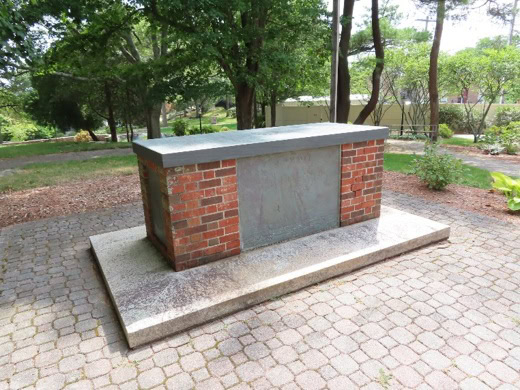
Like the wake left behind a vessel at sea, Yeaton’s influence extended far beyond the horizon of his own lifetime. The cutter he commanded disappeared long ago. The ports he patrolled have changed. The nation he served has grown beyond anything he could have imagined. Yet the ideals he championed, prudence, activity, vigilance, and strict integrity, continue to guide those who stand the watch today.
That is the legacy of Hopley Yeaton: not merely a founder, but one of the men who helped transform a fragile republic’s aspirations into enduring institutions.
Note: This article was previously published as part of the United States Coast Guard’s The Long Blue Line Series.